South Lampung Regency, Indonesia – The SEAMEO Regional Centre for QITEP in Mathematics (SEAQiM), in collaboration with the MGMP Matematika Kabupaten Lampung Tengah conducted the In-Country Course on Teacher-Made Mathematics Teaching Aid for Senior High School Mathematics Teachers from 18 to 22 May 2026. The intensive five-day professional development program aimed to strengthen their capacity to design innovative digital learning media as a mathematics teaching aid.
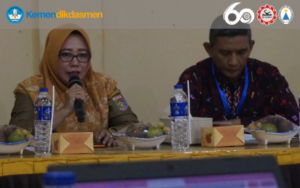
The program officially commenced with an opening ceremony led by Ira Susiana, Head of SMA Negeri 1 Terbanggi Besar. The opening session was also attended by Murdiyono, Chairperson of the MGMP Matematika SMA Kabupaten Lampung Tengah, alongside participating teachers and SEAQiM facilitators. Their presence highlighted the strong collaboration and shared commitment among educational stakeholders in improving the quality of mathematics education through technology integration and innovative teaching practices.
This course was designed to enhance participants’ capacity to integrate digital technologies into the teaching and learning of mathematics, particularly for abstract concepts that benefit from visual representation. Throughout the program, participants explored pedagogical strategies that effectively combine content knowledge with digital tools to improve student understanding and engagement.
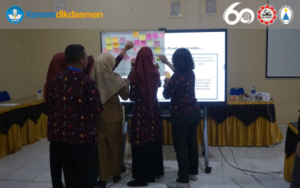
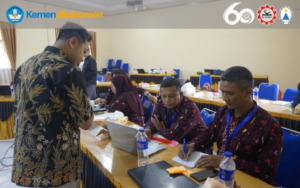
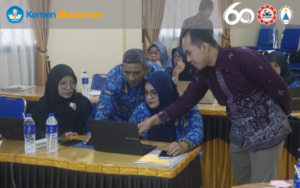
During the training sessions, teachers actively engaged in collaborative workshops, simulations, and problem-solving activities that encouraged creativity and innovation in classroom practice. Participants learned how to create interactive mathematical visualizations, develop dynamic geometry constructions, and design student-centered learning activities that foster inquiry, exploration, and deeper conceptual understanding.
The course provided hands-on experience in selecting and utilising ready-to-use virtual manipulatives and connected classroom technologies to support interactive demonstrations. Participants also developed skills in constructing dynamic function graphs and designing interactive learning activities using digital graphing tools.
In addition, the program guided participants in creating two-dimensional (2D) and three-dimensional (3D) analytic geometry models, as well as automating simple mathematical processes through built-in scripting features in advanced dynamic mathematics software.
As a culmination of the course, participants designed and produced their own digital teaching aids and demonstrated their practical application through collaborative presentations and micro-teaching sessions.
The program reflects SEAQiM’s continuous commitment to supporting mathematics teachers in Southeast Asia through sustainable and impactful professional development initiatives. The training is expected to contribute significantly to improving the quality of mathematics teaching and learning in Lampung Tengah Regency and beyond.
photos: