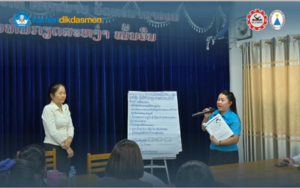
Vientiane, Lao PDR, 20–22 October 2026 — The Southeast Asian Regional Centre for QITEP in Mathematics (SEAQiM) contributed to the regional initiative Regional Empowerment of Southeast Asian Educators through Unplugged Computational Thinking: A Multi-Centre Implementation Initiative, held in Vientiane, Lao PDR, from 20 to 22 October 2026. Supported by the SEAMEO Inter-Centre Collaboration (ICC) Grant Scheme for Fiscal Year 2026/2027, the initiative brings together expertise from SEAMEO Centres and regional and international education partners to strengthen the integration of Computational Thinking (CT) into teaching and learning across Southeast Asia.
Recognised as one of the Top 3 Outstanding Initiatives under the SEAMEO ICC Grant Scheme, the project is led by SEAMEO STEM-ED, with SEAQiM, SEAMEO SEAMOLEC, and SEAMEO CED as collaborating centres. This multi-centre approach reflects SEAMEO’s commitment to strengthening regional cooperation by combining complementary expertise in mathematics education, STEM education, technology-supported learning, curriculum development, and teacher professional development.
The three-day programme focused on equipping educators with practical approaches to integrating Computational Thinking into mathematics and other subject areas without relying solely on digital devices. Through theoretical sessions, hands-on activities, curriculum mapping, and collaborative lesson planning, participants explored ways to develop students’ logical reasoning, sequencing, algorithmic thinking, multidisciplinary inquiry, and problem-solving skills.
The programme began with an introduction to the theoretical foundations of Unplugged Computational Thinking and an overview of the Guidebook for Unplugged Computational Thinking. Participants then engaged in practical activities using colouring books, mathematics classroom tasks, STEM-based learning activities, and robotics programming adapted for classroom use. These sessions highlighted opportunities to connect Computational Thinking activities with national curriculum standards and classroom learning objectives, while adapting teaching resources to local educational contexts.
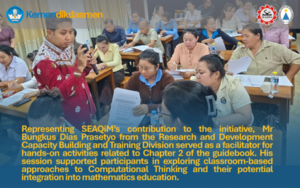
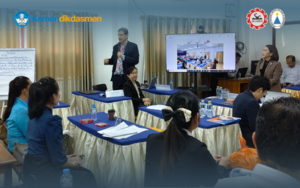
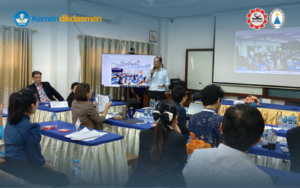
Representing SEAQiM’s contribution to the initiative, Mr Bungkus Dias Prasetyo from the Research and Development Capacity Building and Training Division served as a facilitator for hands-on activities related to Chapter 2 of the guidebook. His session supported participants in exploring classroom-based approaches to Computational Thinking and their potential integration into mathematics education. SEAQiM’s involvement underscores its continuing commitment to strengthening mathematics teaching and supporting educators in developing innovative and meaningful learning experiences.
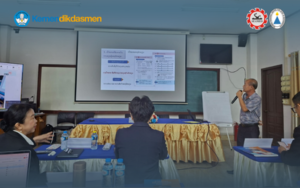
The programme also featured contributions from experts representing the University of Tsukuba, the University of Chile, SEAMEO STEM-ED, SEAMEO RECSAM, SEAMEO SEAMOLEC, and Department of International Cooperation, Ministry of Education and Sports. Their involvement demonstrated the value of cross-institutional collaboration and the sharing of expertise to advance Computational Thinking, mathematics education, and STEM learning.
On the final day, participants explored the relationship between Unplugged Computational Thinking and core Artificial Intelligence (AI) concepts through colouring activities and board games. They also worked collaboratively to develop lesson plans based on guidebook activities and worksheets, followed by presentations, peer review, and expert feedback. A round-table discussion provided an opportunity to reflect on implementation challenges, identify opportunities, and explore future collaboration.
photos: