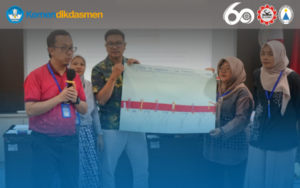
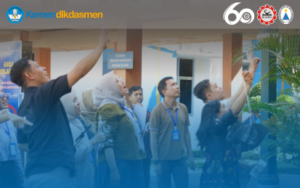
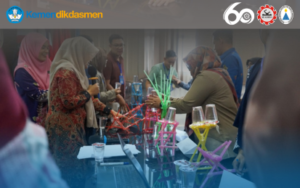
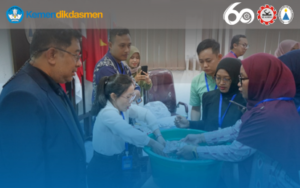
Yogyakarta, Indonesia – The SEAMEO Regional Centre for QITEP in Mathematics (SEAQiM) successfully conducted the Regular Course on STEM for Mathematics Learning for Primary School Teachers from 16 to 29 July 2026, welcoming 31 primary school teachers from Brunei Darussalam, Cambodia, Indonesia, Lao PDR, Malaysia, Myanmar, and Thailand. The two-week regional professional development programme provided an intensive learning platform for educators to strengthen their capacity to design and facilitate innovative mathematics learning through Science, Technology, Engineering, and Mathematics (STEM) education while fostering regional collaboration among teachers across Southeast Asia.
The learning programme was carefully structured to combine conceptual understanding, pedagogical development, practical application, and professional reflection. During the first week, participants explored current issues in mathematics education and examined the fundamental principles of STEM education as an integrated learning approach. They participated in sessions on STEM Activities in Primary School, Engineering Design Process, Strategies for STEM Learning Implementation, Mathematical Literacy, Problem Solving in STEM, Assessment in STEM, and Digital Mathematics Environment, enabling participants to deepen their understanding of how mathematical concepts can be connected with science, technology, engineering, and everyday contexts. Throughout these sessions, participants actively engaged in collaborative discussions, case analyses, and classroom-based learning activities designed to translate educational theories into practical teaching strategies.
Building upon these foundational concepts, the second week emphasized classroom implementation and sustainable professional practice. Participants studied Computational Thinking in STEM, Mathematics in Context, and STEM for Sustainable Development, highlighting the importance of preparing students not only with strong numeracy skills but also with the ability to address real-world challenges through analytical reasoning and interdisciplinary thinking. Participants subsequently developed comprehensive STEM lesson plans, refined them through peer-teaching sessions, and implemented their instructional designs during a Real Teaching activity in a local primary school. These authentic classroom experiences were followed by structured reflection sessions, action plan development, post-course evaluation, and discussions on future implementation strategies in participants’ respective schools and education systems.
The programme also has significant potential to generate a multiplier effect across Southeast Asia. Each participating teacher serves as a catalyst for change within their own school community, with opportunities to influence colleagues through professional learning communities, collaborative lesson planning, and school-based innovation initiatives. As effective practices are adapted and disseminated, the benefits of the programme may extend beyond individual classrooms to district, provincial, and national education systems, contributing to broader improvements in the quality of mathematics teaching and learning.
The Regular Course on STEM for Mathematics Learning for Primary School Teachers 2026 represents more than a regional training programme, it reflects a shared regional investment in educational transformation. By strengthening teachers’ professional capacity, promoting collaborative knowledge exchange, and encouraging evidence-informed classroom innovation, SEAQiM continues to contribute to the advancement of quality mathematics education across Southeast Asia. The true measure of the programme’s success will not be defined solely by the completion of its activities, but by the lasting improvements in teaching practices, richer learning experiences for students, stronger professional communities among educators, and the collective progress toward resilient, inclusive, and future-oriented education systems throughout the region.
photos: